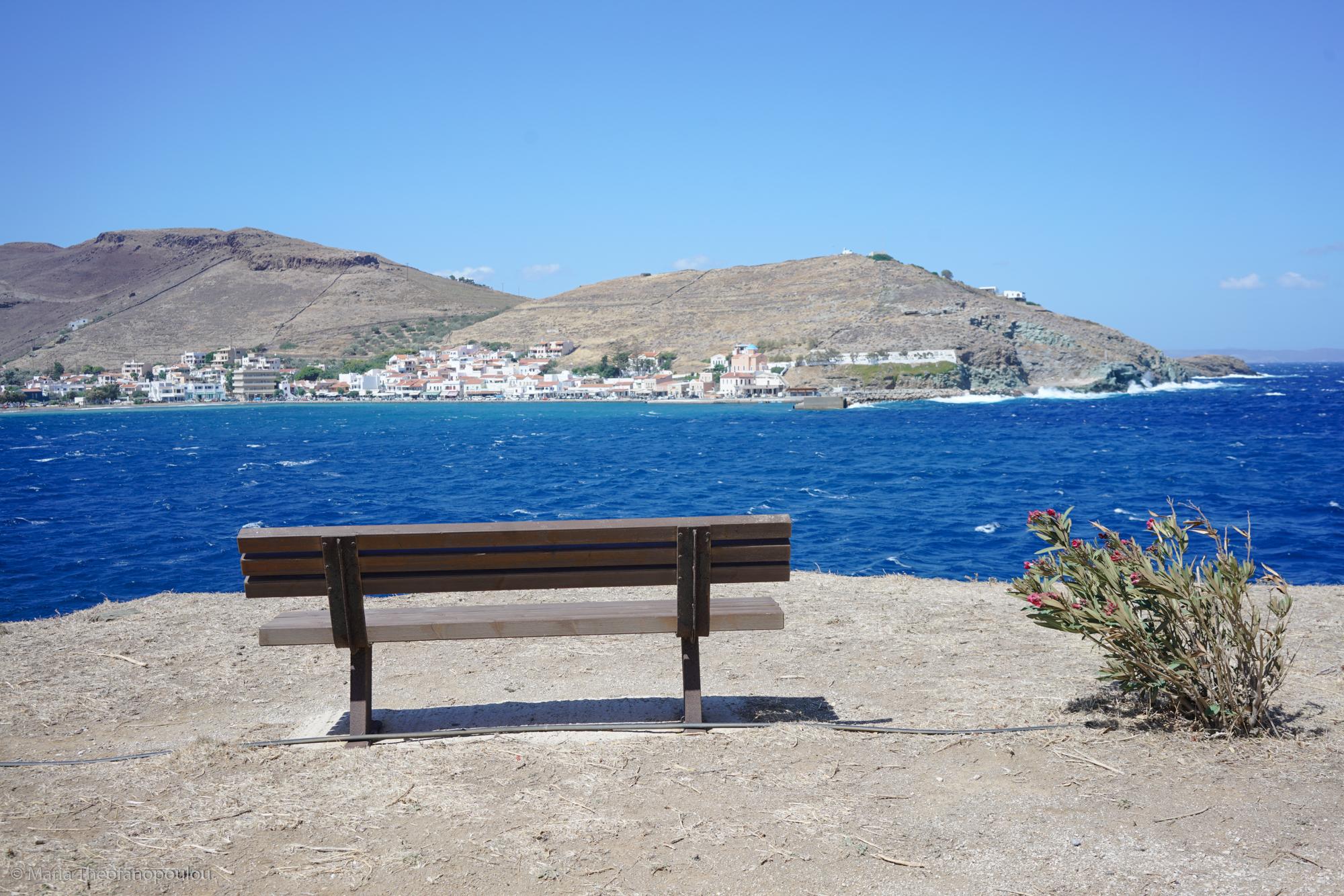
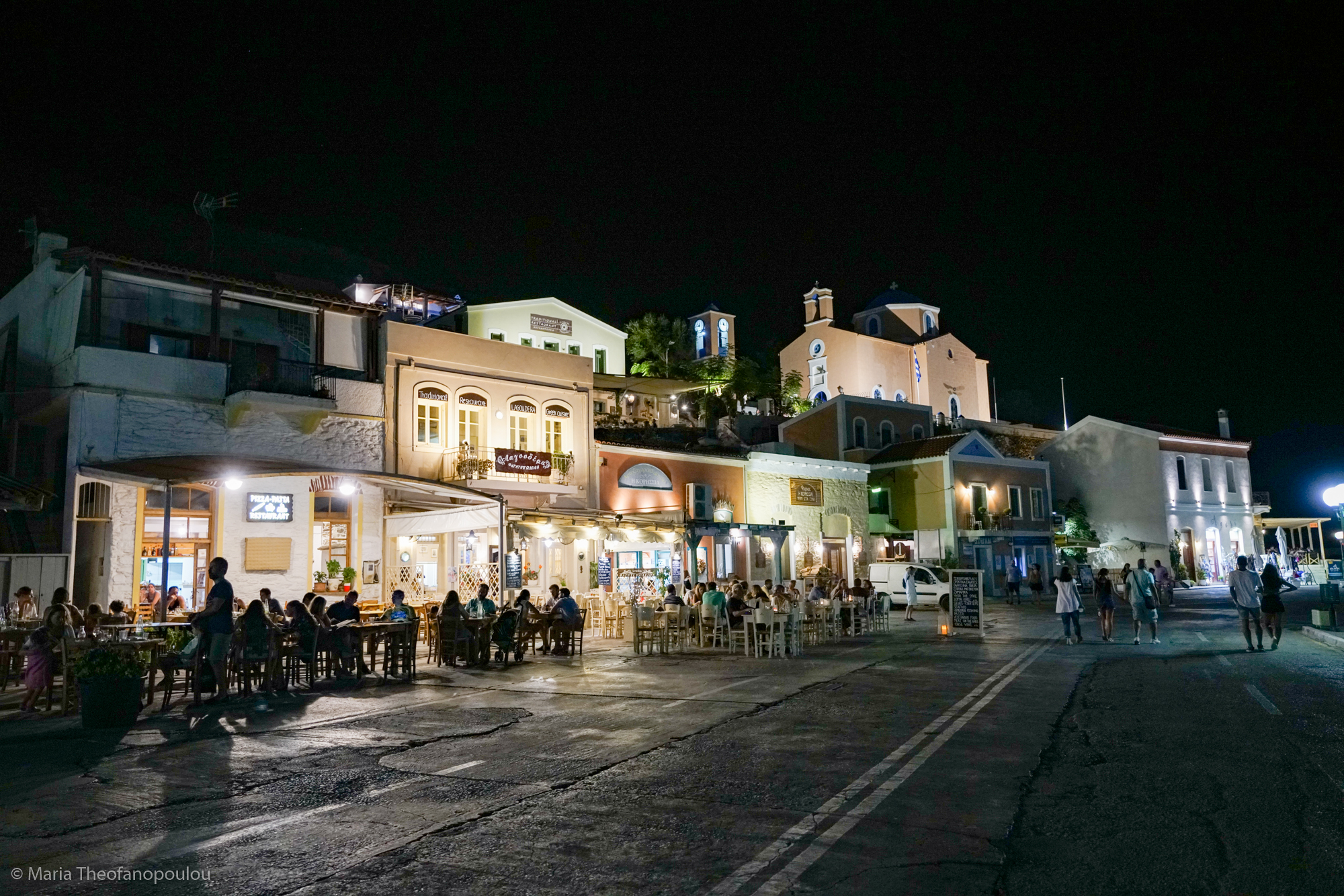
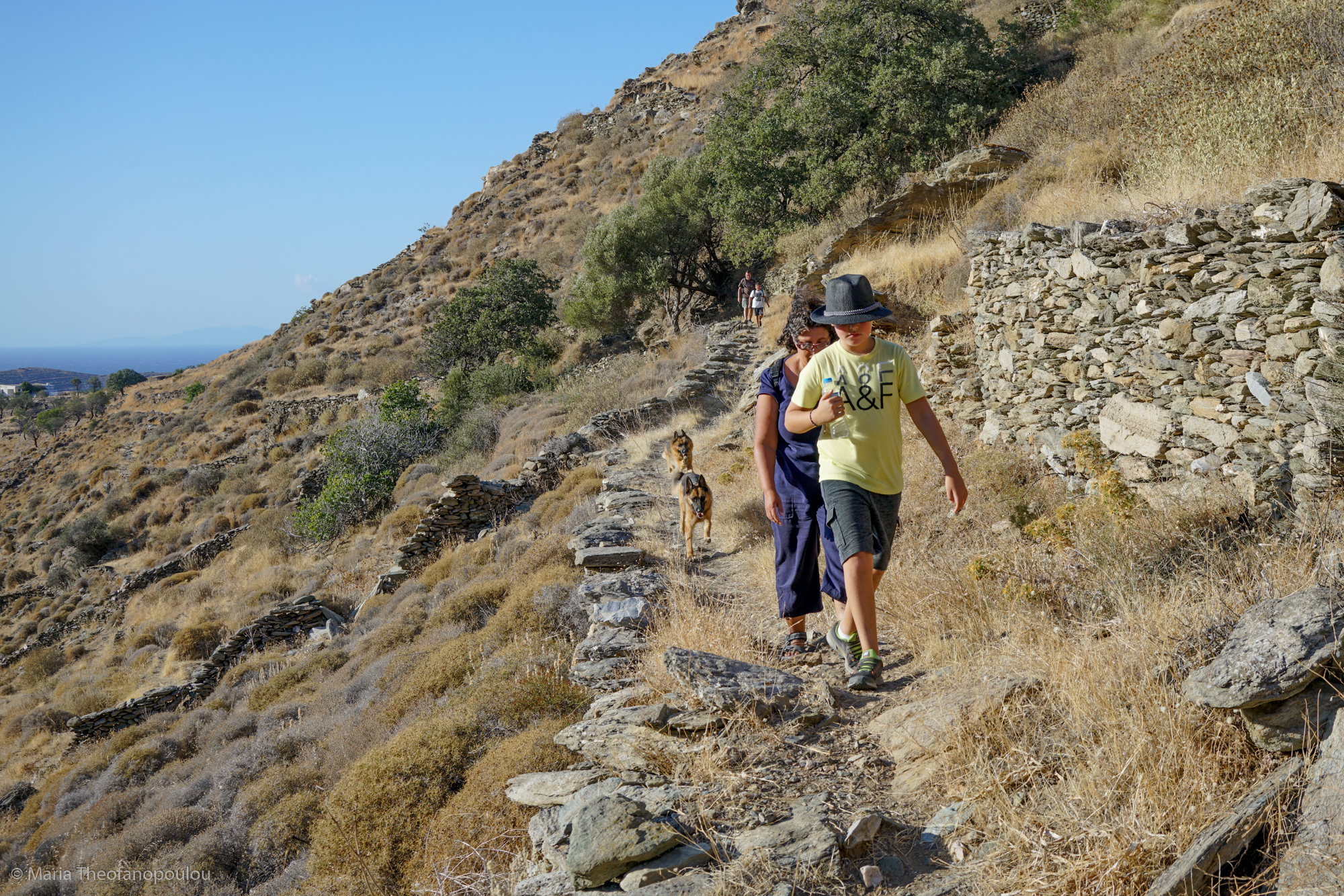
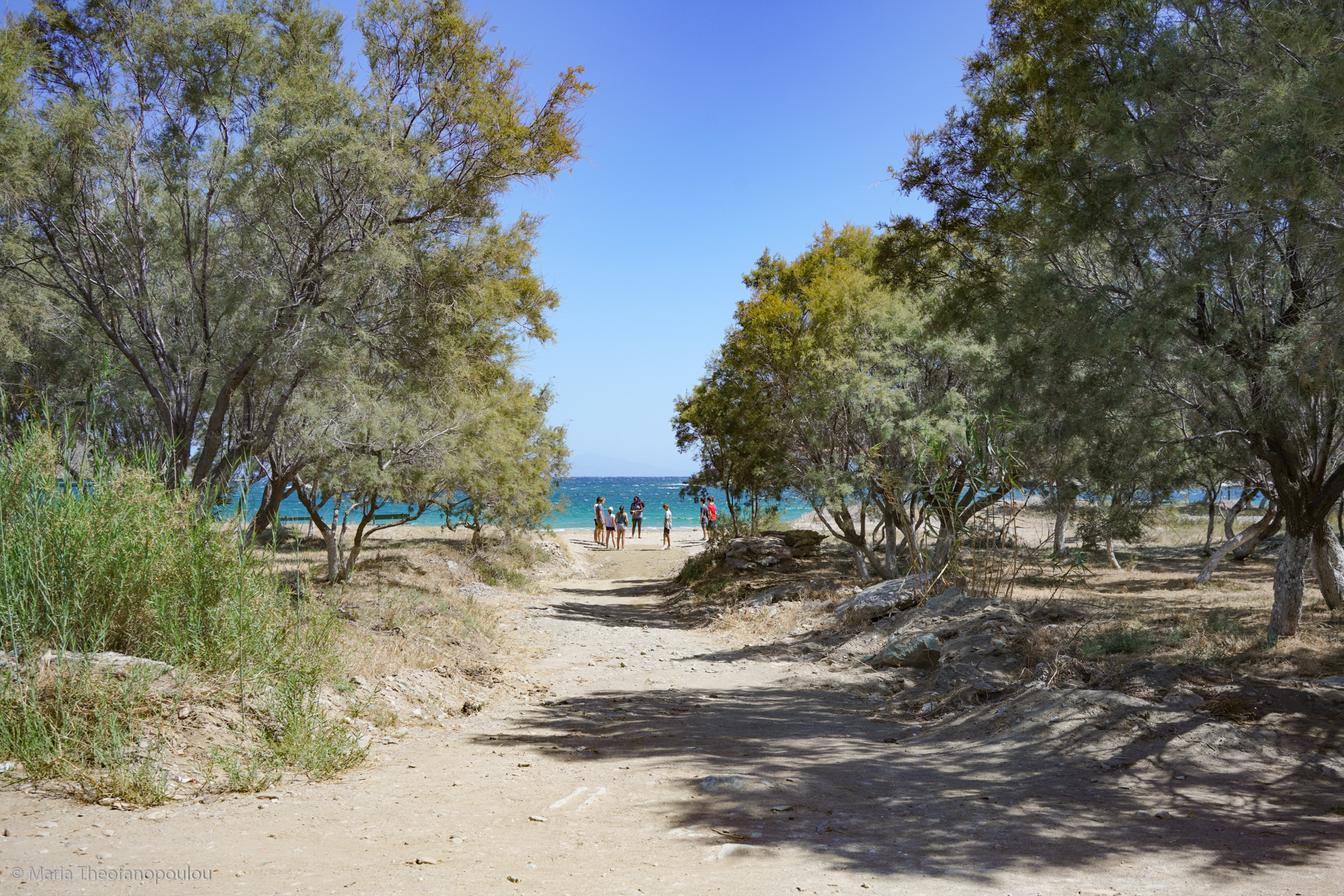
This exceptionally picturesque island lies close to the south-east
coast of
Attica.
The mountain masses, which are encountered in most of the
Cyclades,
are broken up by small valleys sparsely planted with vines and fruit-trees and
run right down to the sea, opening out into pretty little bays. On the western
side of the island is
Agios Nikolaos
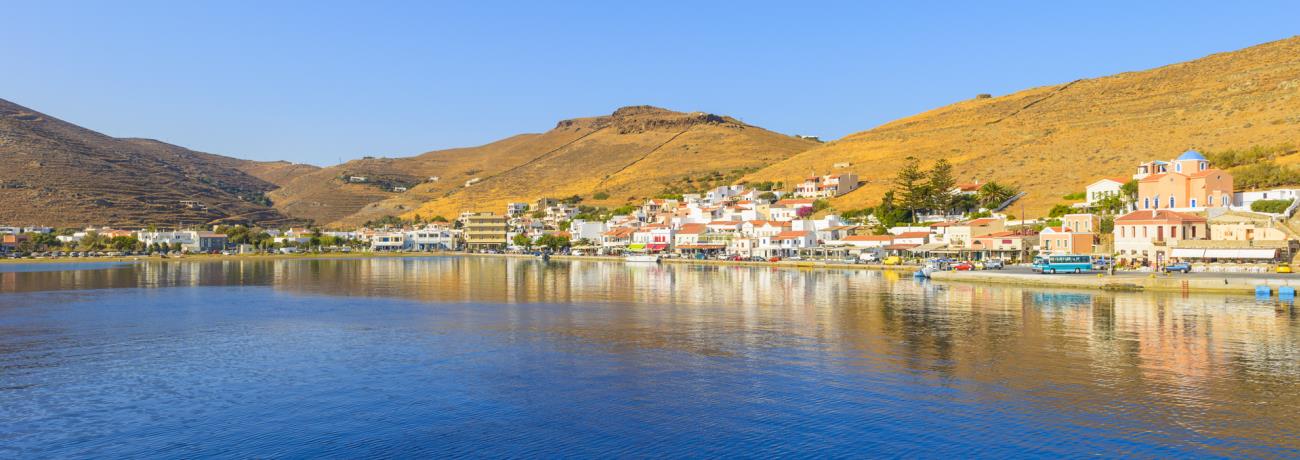
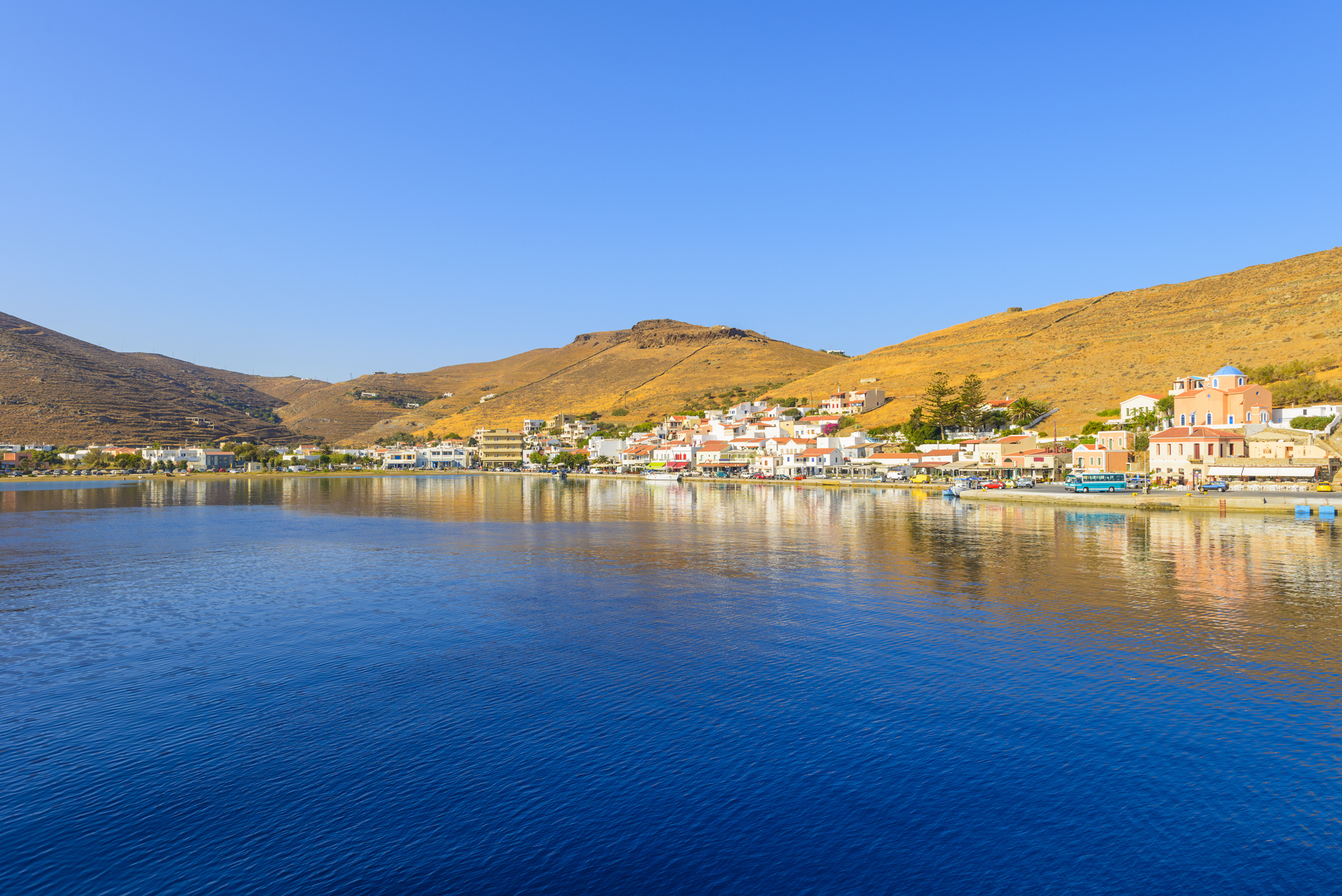
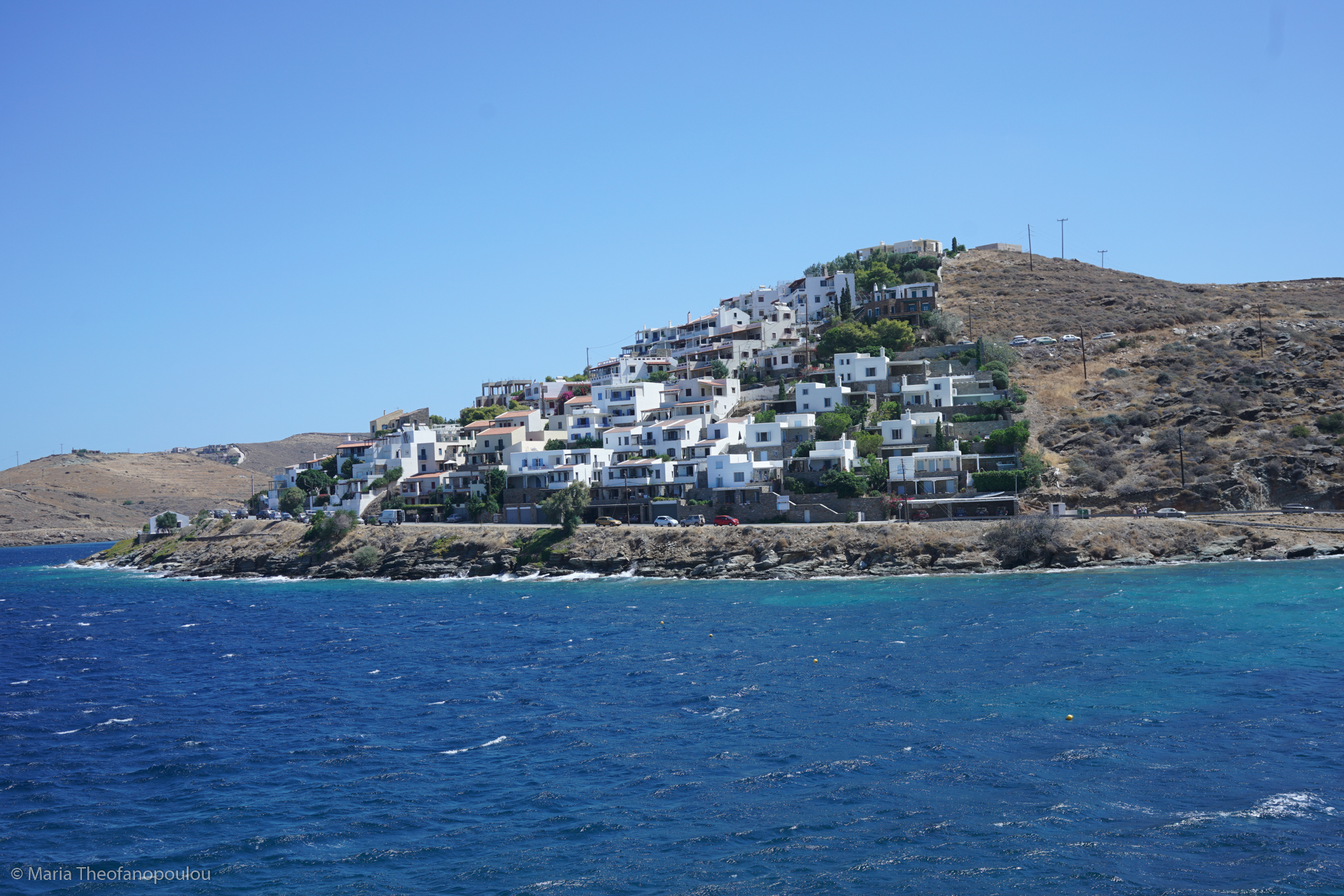
bay, and deep within it the port of
Korissia,
which is considered to be one of the safest natural harbours in the Mediterranean.
Ferry-boats call at
Korissia
- also known as Livadi - which stands on the site of the city of
Korissia,
which in ancient times, with
Ioulis,
Karthea and
Poiessa,
was one of the island's four independent city-states.
The island's capital,
Hora
or Ioulida (6 km. from
Korissia),
has maintained its Cycladic idiom intact. Built in the shape of an amphitheatre,
it presents the visitor with an impressive vista of two-storey houses and tiled
roofs, steep cobbled alleyways and splendid churches with elaborately carved wooden
icon screens. At the highest point of the village, on the site of the ancient
acropolis, is a quarter known as Kastro which commands a breathtaking view of
the nearby islands off the coast of
Attica.
Not far from here is the famous "Lion of Kea" (6th century BC), hewn
out of the slate.
The
Archaeological
Museum in Hora contains interesting finds dating from the Cycladic period.
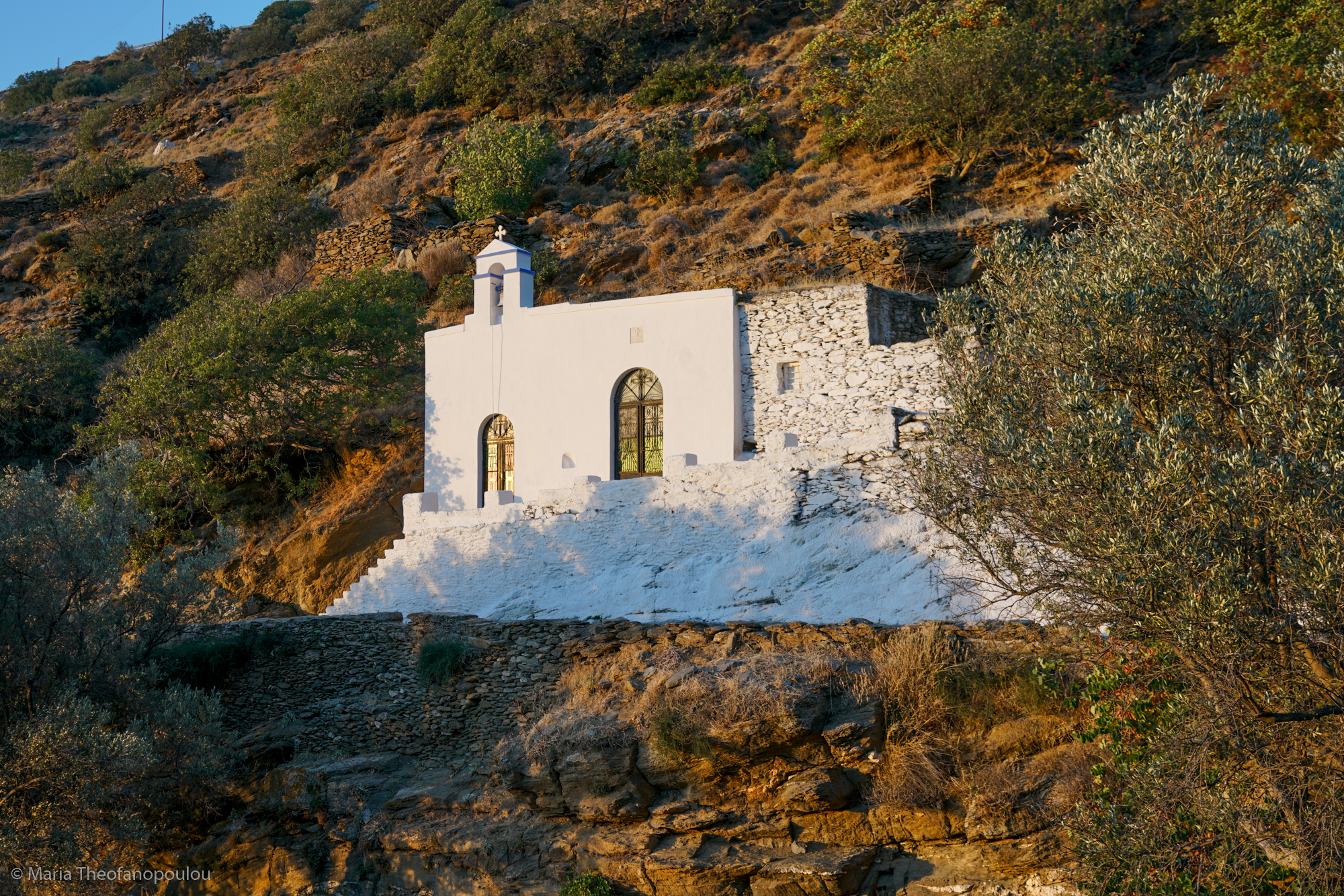
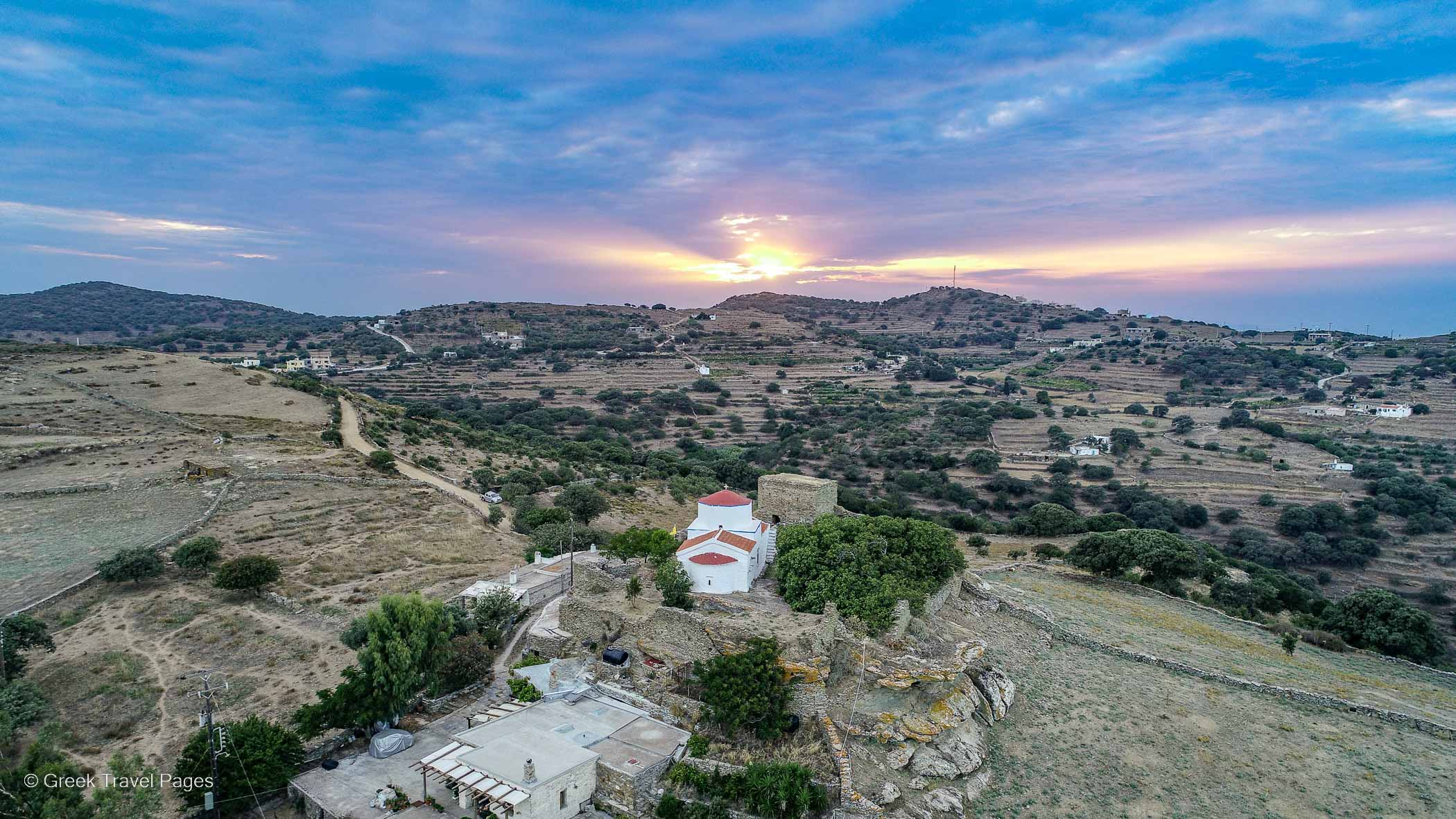
The interior of the island is dotted with miniature chapels, windmills and monasteries,
including that of Our Lady Kastriani, Kea's patron Saint. Easilly accessible from
Athens, Kea offers those who
are seeking a restful holiday clean, uncrowded beaches at
Pisses,
Korissia,
Koundouros,
Otzia bay and Poles bay.Here
they can enjoy delicious fresh fish at picturesque little tavernas.